
Technical Insights Into Phase Change Materials for Thermal Management
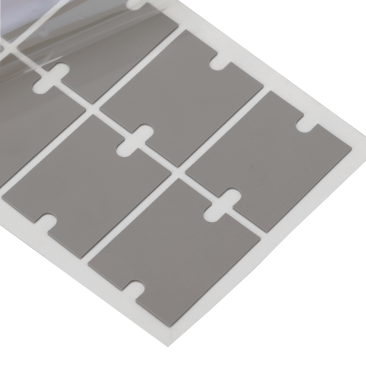
Phase-Change Thermal Materials in Heat-Sink Design: An Engineer’s Technical Review
Abstract: This article presents a technical review of phase-change thermal materials from an engineering perspective. We examine mechanism, key performance metrics, typical applications and reliability considerations for phase-change thermal pads and phase-change metal thermal sheets, and integrate TOUSEN’s product positioning to help engineers with TIM selection and system design.
1. Engineering context: why phase-change thermal materials matter now
Thermal interface materials (TIM) sit between an electronic component and its heat sink; their effective performance is primarily determined by bulk conductivity and, critically, by the interface thermal resistance that arises from imperfect contact. As power densities rise across computing, networking and power electronics, the tolerance for interface thermal resistance has tightened. Engineers must therefore weigh three often competing priorities: low thermal resistance, repeatable manufacturability, and long-term stability.
Phase-change thermal materials bridge the gap between conventional thermal greases (excellent wetting, low initial thermal resistance but challenging process control and pump-out risks) and elastomeric pads (easy handling but higher interface resistance). In practice, a phase-change thermal material behaves as a solid at room temperature—facilitating handling and automated placement—and becomes conformable above its melt transition, enabling better micro-level contact without the operational drawbacks of liquid greases.
2. Basic mechanism and material attributes
The core operating principle is straightforward: a phase-change thermal material incorporates a phase-change matrix (typically a low-melting polymer or waxy binder) loaded with thermally conductive fillers. At ambient temperature the matrix maintains mechanical integrity; once the operating temperature reaches the material’s designed transition range (commonly 45–65°C for many electronic TIMs), the matrix softens or partially liquefies and the filler network can re-arrange to increase intimate contact with mating surfaces.
Key, engineer-relevant attributes to evaluate are:
- Bulk thermal conductivity (k): governs through-thickness conduction.
- Contact thermal resistance (Rc): the dominant contributor to total interface resistance in many assemblies.
- Transition temperature and melt viscosity: determines how readily the material conforms under expected operating conditions and available clamp pressure.
- Long-term stability: dimensional stability after thermal cycling, resistance to pump-out and oxidization.
- Manufacturability: pick-and-place compatibility, tolerance to reflow, and storage/handling considerations.
3. Phase-change thermal pad: practical advantages and application envelope
Phase-change thermal pads combine a compressible substrate with a phase-change matrix to offer a compromise between conformability and mechanical resilience. For many board-level and module-level interfaces, a phase-change thermal pad will:
- enable low-pressure contact with improved micro-gap filling after transition;
- reduce assembly variability compared to hand-applied greases;
- avoid pump-out and migration typical of low-viscosity greases;
- simplify supply-chain handling because the material is solid at ambient.
TOUSEN’s phase-change thermal pad design emphasizes elevated bulk conductivity together with a transition profile that allows flow into asperities at expected operating temperatures, thereby delivering a measurable reduction in interface thermal resistance while maintaining process friendliness.
4. Phase-change metal thermal sheet: target uses and performance trade-offs
Where mechanical tolerances and clamp pressures permit, a metal-backed phase-change sheet offers the highest steady-state conduction path by combining a high-k metal substrate with a thin phase-change interlayer. The metal carrier reduces through-thickness resistance and provides mechanical rigidity, while the phase-change coating minimizes micro-gap thermal resistance.
Typical use cases include server CPUs, high-power IGBT or SiC modules, GPU cards and other scenarios where the thermal path benefits from a low-impedance metal backbone. A phase-change metal thermal sheet can closely approach the low interface resistances of greases but without grease-related reliability issues such as migration or dielectric contamination.
5. Selection guidance and test considerations for system engineers
When selecting between a phase-change thermal pad and a phase-change metal thermal sheet, engineers should consider:
- Assembly pressure and planarity: metal sheets typically need more precise planarity and higher clamp force to exploit the metal's conductivity.
- Operating temperature profile: ensure the transition temperature is within the device’s normal operational window so that the material softens and conforms in situ.
- Thickness budget: thicker pads may mask surface non-planarity but increase thermal path length; metal sheets can be thinner while providing robust conduction.
- Reliability testing: include thermal cycling, humidity exposure and long-term steady-state tests to detect potential separation, embrittlement or filler migration.
Quantitative evaluation should report both bulk thermal conductivity and system-level thermal resistance (e.g., junction-to-ambient deltas with controlled interface conditions). Engineers should avoid relying on bulk k alone; a low Rc under realistic assembly conditions is the most telling metric.
6. TOUSEN product integration: practical notes
TOUSEN’s two representative products — the high-performance phase-change thermal pad and the phase-change metal thermal conductive sheet — are positioned as engineering-grade, cost-effective alternatives to established brand TIMs. In application, consider the following protocol:
- Verify surface roughness and flatness to estimate expected contact improvement after transition.
- Choose material thickness to balance compliance and thermal path length.
- Control assembly temperature ramp to pass through the phase transition during early operation or in a controlled burn-in step.
- Perform system-level thermal characterization under expected clamping conditions and duty cycle.
Note: Engineering verification under representative mechanical and thermal conditions remains essential. Phase-change TIMs deliver the greatest benefit when the material selection, transition temperature and mechanical design are co-optimized.
7. Conclusions and outlook
Phase-change thermal materials occupy a pragmatic middle ground for modern thermal management: they reduce interface resistance comparable to greases while retaining the handling and manufacturing advantages of solid pads. For many high-density and high-reliability systems, a well-specified phase-change thermal pad or phase-change metal thermal sheet will improve thermal performance and manufacturability simultaneously.
From an engineering perspective, the meaningful progress for 2025 and beyond will come from tighter integration of material transition characteristics with mechanical assembly design and from more comprehensive reliability datasets. TOUSEN’s product portfolio reflects these priorities by focusing on elevated bulk conductivity, low interface resistance and process-oriented design.
Engineering Guide to Silicone Thermal Pads and Gap Filler Pads
Thermally Conductive Silicone Pads in TIM: Applications and Challenges
Related Article