Thermal Paste - Thermal Grease for AI Cooling
Thermal Paste and Advanced Cooling Strategies for AI Hardware: An Engineering Perspective
As artificial intelligence workloads continue to scale in complexity and computational intensity, thermal management has become a critical engineering discipline rather than a secondary consideration. High-performance GPUs, AI accelerators, ASICs, and edge computing modules operate under sustained heavy loads, generating significant thermal output. Without effective heat dissipation, system stability, computational throughput, and hardware longevity are directly compromised.
From a hardware engineer’s standpoint, optimizing the thermal interface between the processor and its cooling assembly is one of the most impactful and cost-effective improvements available. In this context, thermal paste and thermal grease play a central role in enabling efficient heat transfer within AI-driven computing platforms.
The Role of Thermal Interface Materials in AI Systems
In any AI hardware architecture—whether deployed in data centers, enterprise GPU clusters, or embedded edge AI devices—the cooling stack typically consists of a heatsink or cold plate, active airflow or liquid cooling, and a thermal interface material (TIM). The TIM fills microscopic surface imperfections between the silicon die and the heatsink base.
Even surfaces that appear smooth at the macroscopic level contain microscopic voids. Air trapped in these voids has extremely low thermal conductivity and dramatically increases thermal resistance. High-performance thermal paste eliminates these air gaps, reducing interface resistance and improving heat conduction efficiency.
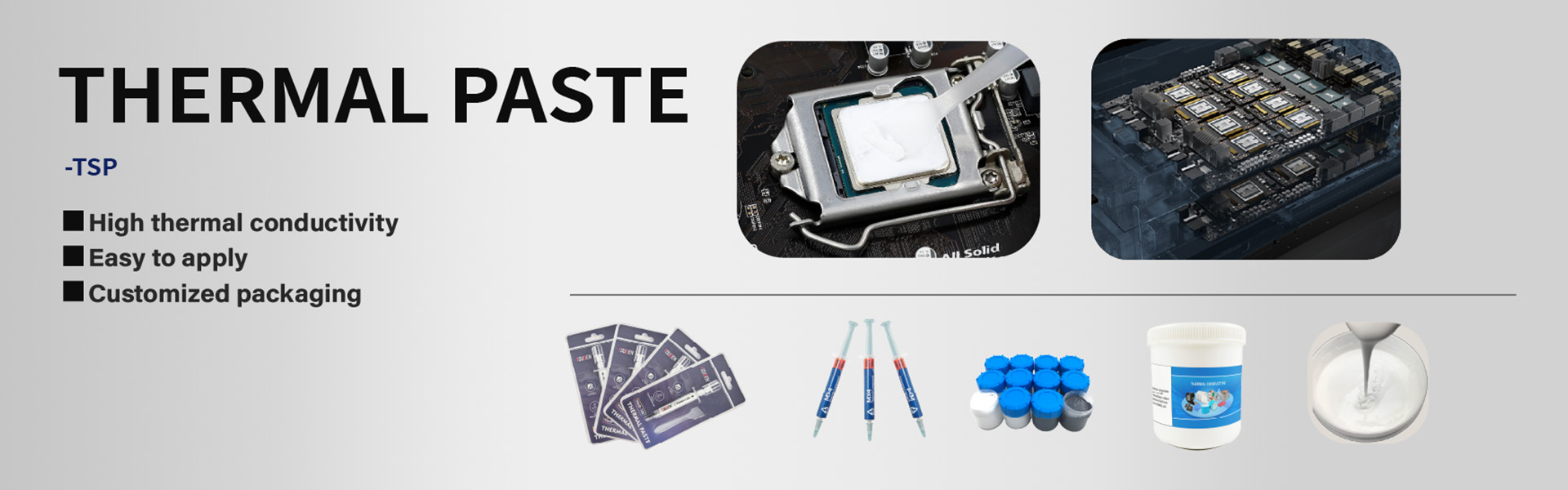
The terms thermal paste and thermal grease are often used interchangeably in industry practice. Both refer to thermally conductive compounds engineered to enhance heat transfer between mating surfaces. Differences typically lie in viscosity, filler composition, and application characteristics, but their engineering objective remains consistent: minimizing thermal resistance at the interface.
Performance Benchmarks and Industry References
Within enthusiast and high-performance computing communities, brands such as thermal grizzly are frequently referenced as performance benchmarks. Products under the thermal grizzly name are known for relatively high thermal conductivity and are widely adopted in overclocking and custom PC applications.
However, from an engineering and large-scale deployment perspective, brand recognition alone is not the determining factor. Data center and AI infrastructure designers must balance performance, reliability, manufacturability, and cost efficiency. A thermal grease solution that performs consistently across thousands of deployed units often provides greater long-term value than a niche, high-cost alternative.
Key Engineering Criteria for Selecting Thermal Paste
1. Thermal Conductivity
Thermal conductivity, typically measured in W/m·K, is a primary performance indicator. Higher conductivity generally translates to improved heat transfer. For AI accelerators operating under sustained loads, a high-quality thermal paste can significantly reduce peak junction temperatures and thermal throttling events.
2. Interface Thermal Resistance
In real-world systems, interface resistance is often more critical than bulk conductivity. A well-formulated thermal grease must adequately wet both contact surfaces, filling microvoids without introducing pump-out or voiding during thermal cycling.
3. Mechanical and Thermal Stability
AI systems frequently operate 24/7 in enterprise environments. Long-term reliability is non-negotiable. The selected thermal paste must resist drying, cracking, separation, or migration over extended thermal cycling and high-temperature exposure.
4. Application Consistency
Manufacturing repeatability is equally important. A properly engineered thermal grease should offer controlled viscosity, ensuring uniform dispensing during automated or manual assembly processes.
High-Performance Thermally Conductive Paste for AI Applications
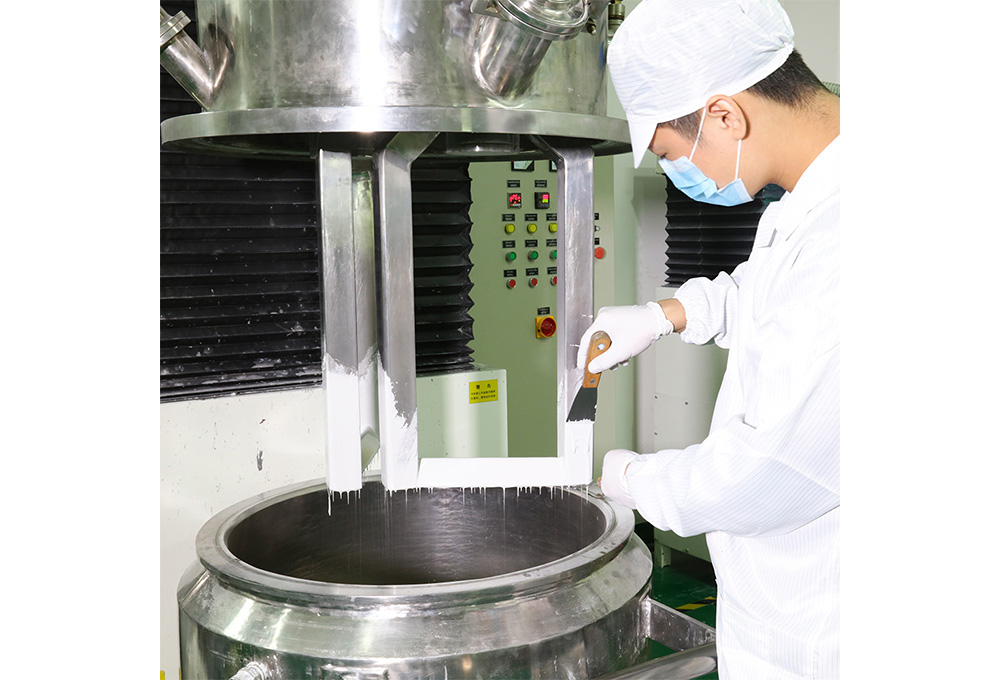
For AI servers, GPU workstations, embedded edge systems, and high-density compute modules, selecting a reliable thermal interface compound is essential to overall system efficiency. One example of a high-performance solution designed for demanding environments is the TSAD66-P thermally conductive paste.
Product link:
https://www.itousen.com/products/tsad66-p-thermally-conductive-paste.html

This advanced thermal paste formulation is engineered to deliver:
- High thermal conductivity to enhance heat dissipation from AI processors and accelerators.
- Excellent thermal stability under sustained heavy computational loads.
- Strong surface wetting characteristics to minimize interface resistance.
- Compatibility with copper, aluminum, and composite heatsink materials.
In comparative thermal validation scenarios, a properly selected thermal grease such as TSAD66-P can reduce core temperatures, improve frequency stability, and support higher sustained computational throughput. For AI workloads where performance consistency is paramount, these improvements directly translate into operational efficiency gains.
Why Thermal Paste Matters More Than Many Assume
A common misconception in system design is that upgrading heatsinks or implementing liquid cooling alone will resolve thermal bottlenecks. In practice, the interface layer often represents a critical constraint. Even premium cooling hardware cannot compensate for poor contact efficiency between surfaces.
A high-quality thermal paste ensures that the cooling assembly operates at its intended capacity. When paired with optimized airflow or liquid cooling systems, advanced thermal grease compounds help maintain lower junction temperatures, reduce fan speeds, decrease acoustic output, and extend hardware service life.
While well-known brands such as thermal grizzly may set performance expectations in certain markets, engineering-driven evaluation—based on thermal resistance testing, aging validation, and system-level benchmarking—remains the most reliable approach to selecting the right material for AI deployments.
Conclusion
As AI infrastructure continues to expand across cloud, enterprise, and edge environments, thermal management strategy must be grounded in engineering data and long-term reliability considerations. Thermal paste and thermal grease are not peripheral accessories; they are foundational components of system-level performance optimization.
By carefully selecting high-performance thermally conductive materials and validating them under realistic workloads, engineers can reduce thermal bottlenecks, maintain computational stability, and protect hardware investments.
For organizations seeking a reliable, high-performance thermal paste solution tailored to demanding AI applications, the TSAD66-P thermally conductive paste offers a technically robust and deployment-ready option.
Thermal Past - Thermal Grease for Telecom Systems
Thermal Paste for Servers-Engineering Cooling Guide
Related Article