
Thermal Tape Solutions for Reliable Electronic Heat Management
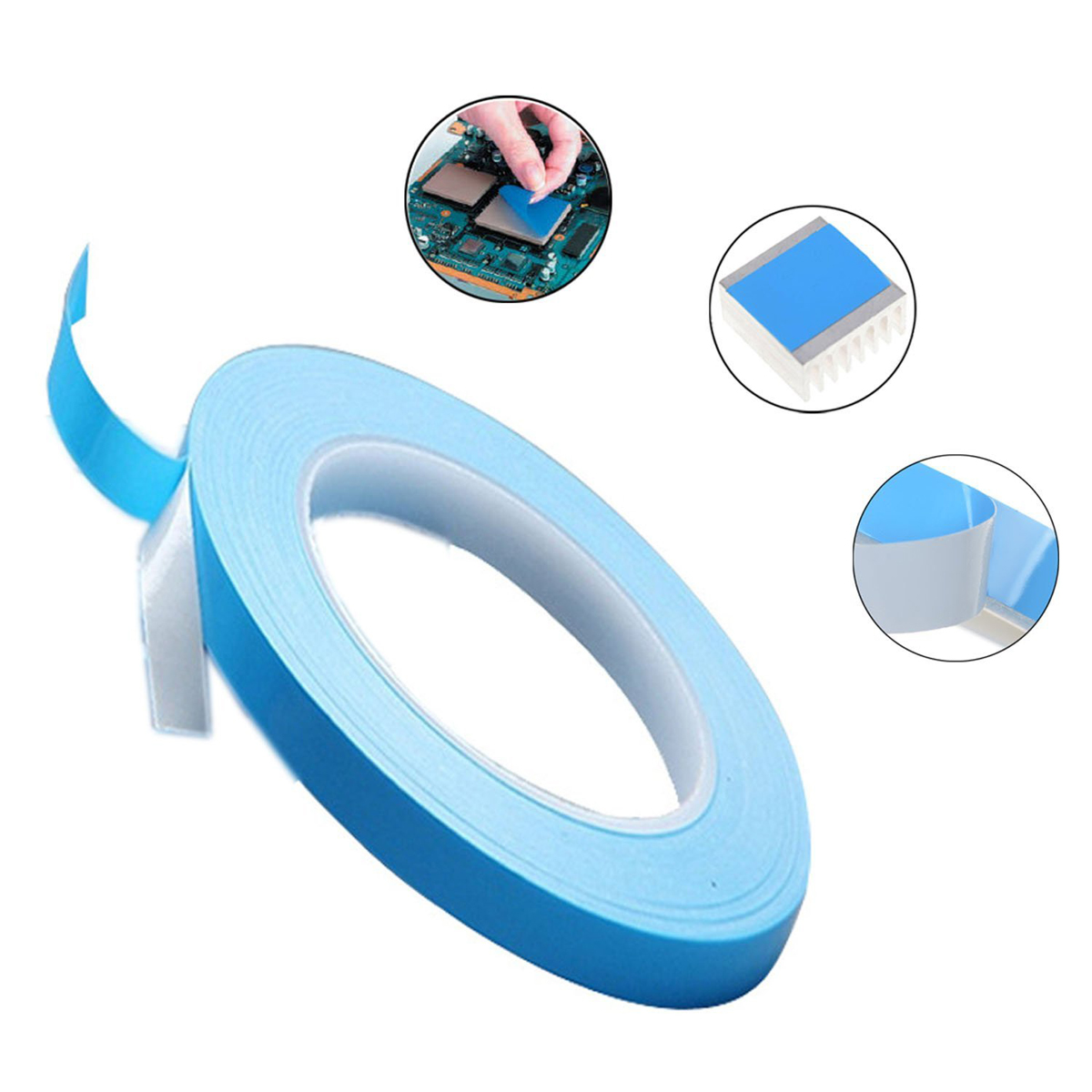
Engineer’s Perspective: A Comprehensive Guide to Thermal Tape in Modern Thermal Management
As electronic devices continue to evolve toward higher power density, smaller form factors, and tighter component layouts, thermal management has become one of the most critical factors affecting system stability, service life, and long-term reliability. Among various thermal interface materials, thermal tape has gained wide acceptance due to its ease of installation, consistent performance, and ability to provide both heat transfer and mechanical fixation.
From consumer electronics and communication equipment to power supplies and new energy vehicles, thermal tape plays a vital role in creating reliable thermal paths between heat-generating components and heat sinks or enclosures. This article provides an objective and engineering-focused overview of thermal tape, including material categories, key performance indicators, typical applications, and selection guidelines. Special attention is given to thermal insulation tape and double sided thermal tape, as well as a practical product solution for thin-gap thermal interface challenges.
1. What Is Thermal Tape and Why It Matters
Thermal tape is a pressure-sensitive adhesive material designed to transfer heat across contact interfaces while maintaining secure mechanical bonding. Compared with traditional solutions such as thermal grease or thermal pads, thermal tape offers several engineering advantages:
- Simple and clean installation without dispensing or curing processes
- Precisely controlled thickness for narrow-gap thermal interfaces
- Stable and repeatable thermal performance in mass production
- Additional structural support for lightweight assemblies
In high-density electronic assemblies, the thermal interface often becomes the dominant factor in overall thermal resistance. Selecting the appropriate thermal tape can significantly improve heat dissipation efficiency while simplifying manufacturing processes.
2. Categories of Thermal Tape and Their Functions
2.1 Standard Thermal Tape
Standard thermal tape is primarily designed to facilitate heat transfer between components such as PCBs, power devices, and metal heat spreaders. It typically features:
- Thermal conductivity ranging from 3 to over 10 W/m·K
- Moderate adhesive strength for reliable bonding
- Thin profiles to minimize interface thermal resistance
This type of thermal tape is widely used in SSD cooling, LED modules, and compact electronic enclosures where both space and thermal efficiency are critical.
2.2 Thermal Insulation Tape
Unlike conductive materials, thermal insulation tape is designed to block or reduce heat transfer. Its main purpose is to protect heat-sensitive components from nearby heat sources and to improve temperature uniformity within tightly packed assemblies.
Typical applications include:
- Thermal shielding for sensors and control ICs
- Heat isolation in battery management systems
- Electrical insulation with thermal protection requirements
Key performance priorities for thermal insulation tape include high thermal resistance, dielectric strength, and long-term thermal stability.
2.3 Double Sided Thermal Tape
Double sided thermal tape provides adhesive layers on both sides while maintaining efficient heat transfer through the core material. This design enables simultaneous mechanical fixation and thermal conduction in a single assembly step.
Advantages of double sided thermal tape include:
- Reduced assembly complexity and faster production cycles
- Elimination of screws or clips in lightweight structures
- Consistent thermal contact pressure across the interface
It is commonly applied in bonding heat sinks to power components, attaching thermal spreaders to chips, and securing metal frames to PCB surfaces.
3. Key Performance Parameters Engineers Should Evaluate
When selecting thermal tape for practical designs, engineers should consider the following technical parameters:
3.1 Thermal Conductivity
Thermal conductivity directly reflects the material’s ability to transfer heat. Higher values indicate more efficient heat flow across the interface, which is especially important for high-power components.
3.2 Thermal Resistance
Thermal resistance depends on both material properties and thickness. Even high-conductivity materials can perform poorly if the adhesive layer is excessively thick or poorly compressed.
3.3 Conformability and Compression Behavior
Good surface wetting and micro-gap filling are essential to reduce air voids at the interface, which are a major source of thermal resistance.
3.4 Adhesion Strength and Durability
For double sided thermal tape in particular, shear and peel strength must remain stable over time, including under thermal cycling and vibration conditions.
3.5 Operating Temperature Range
Materials must maintain both adhesive and thermal properties across the full operating temperature range of the device, without softening, hardening, or releasing volatile compounds.
4. Typical Engineering Applications
4.1 Solid-State Drive (SSD) Thermal Control
High-performance SSD controllers generate concentrated heat during intensive workloads. Using thermal tape between the controller and the heat spreader provides consistent contact and stable thermal performance without the variability associated with manual thermal paste application.
In many cases, optimized thermal tape solutions can reduce steady-state operating temperatures by 10–15°C, helping maintain sustained data throughput.
4.2 Power Module Cooling
Power converters and IGBT modules often require reliable thermal interfaces between substrates and metal baseplates. High-conductivity thermal tape can replace traditional grease-based solutions while improving assembly efficiency and cleanliness.
When structural bonding is also required, double sided thermal tape offers an integrated solution that improves both thermal performance and mechanical stability.
4.3 Thermal Isolation for Sensitive Components
In densely packed control boards, thermal insulation tape is frequently used to shield temperature-sensitive devices from nearby power components. This selective heat blocking strategy helps improve overall system reliability and calibration stability.
5. Practical Selection Guidelines
| Design Requirement | Recommended Material | Engineering Focus |
|---|---|---|
| Efficient heat transfer | High-conductivity thermal tape | Low thermal resistance, thin structure, good compressibility |
| Heat shielding or isolation | Thermal insulation tape | High thermal resistance, strong dielectric properties |
| Bonding with heat transfer | Double sided thermal tape | Balanced adhesion strength and thermal conductivity |
In practical product development, thermal simulation and prototype validation are strongly recommended to verify whether selected materials meet system-level thermal targets under worst-case operating conditions.
6. Recommended Ultra-Thin Thermal Tape Solution
For applications requiring extremely thin thermal interfaces with reliable adhesion, ITOUSEN offers an ultra-thin adhesive thermal tape series designed for precision thermal management:
Product link:
https://www.itousen.com/Ultra-Thin-Adhesive-Tape.html

Key Product Advantages
- Ultra-thin construction for minimal interface thermal resistance
- High thermal conductivity suitable for power-dense components
- Stable adhesive performance compatible with automated assembly
- Multiple thickness and format options for flexible design integration
This product series is well suited for compact electronic modules, power devices, heat spreaders, and applications where space constraints and thermal efficiency must be addressed simultaneously. For designs requiring double sided thermal tape characteristics, it also provides effective structural bonding while maintaining efficient heat transfer.
7. Conclusion
From both heat conduction and heat isolation perspectives, thermal tape, thermal insulation tape, and double sided thermal tape serve distinct yet complementary roles in modern thermal management systems. For design engineers, optimal material selection should be based on a balanced evaluation of:
- Thermal performance metrics
- Mechanical reliability
- Assembly processes and production consistency
Effective thermal interface design is not merely a material choice but a system-level engineering decision. By properly integrating thermal tape solutions into product architecture, manufacturers can achieve improved reliability, longer service life, and more stable performance across diverse operating environments.
For more professional insights and application guidance on thermal management materials, please visit the ITOUSEN News Center for continuous technical updates and engineering resources.
Pad Thermal Solutions for CPU and GPU Thermal Management
Engineering Analysis of PTM7950 Thermal Pad and Thermal Heating Pad
Related Article