Thermal Runaway in EV Battery Packs: Causes, Mechanisms, and Material Solutions
Thermal Runaway in EV Battery Packs: Causes, Mechanisms, and Material Solutions
An engineering overview of causes, mechanisms, and preventive materials — TOUSEN® Thermal Solutions
--------------------------------------------------------------------------------------------------------------------------------------------------------------------------------------------------------------------------------------------------------------
1. Understanding Thermal Runaway
Thermal runaway in lithium-ion batteries occurs when internal heat generation exceeds the system’s capacity to dissipate it, resulting in self-accelerating temperature rise, electrolyte decomposition, and potential ignition. The phenomenon typically originates from:
- Internal short circuits: Separator rupture, contamination, or mechanical damage causing direct electrode contact.
- External abuse: Overcharging, deep discharge, high-rate operation, or physical impact.
- Material reactivity: High-nickel cathodes may release oxygen at elevated temperatures, triggering exothermic reactions with the electrolyte.
Once initiated, the process forms a positive feedback loop — heat generation → material degradation → increased heat release → temperature escalation — culminating in cell venting or combustion.
2. Managing Thermal Runaway: Engineering Approach
Mitigation requires three coordinated strategies: source control, thermal pathway optimization, and material-level protection.
2.1 Source Control
- Maintain strict manufacturing quality to avoid contamination or electrode misalignment.
- Use BMS monitoring for voltage, temperature, and impedance to detect early anomalies.
- Adopt thermally stable electrode chemistries and coatings for enhanced safety margins.
2.2 Thermal Pathway Optimization
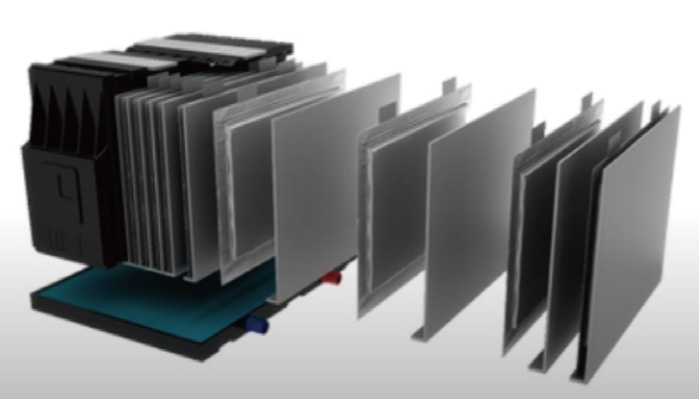
- Ensure uniform temperature distribution via cooling channels or heat spreaders.
- Combine active cooling (liquid/air) with passive systems (PCM, heat pipes).
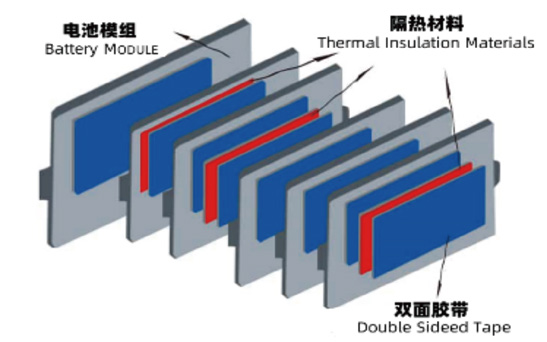
- Use spacing or isolation barriers to limit heat propagation between cells.
2.3 Material Protection Layer
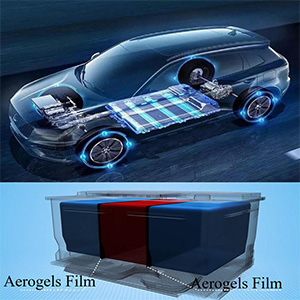
Thermal runaway propagation can be delayed or even contained through high-performance insulation and interface materials. TOUSEN® provides proven solutions for passive protection using aerogel composites and silicone-based materials.
3. Key Protective Materials
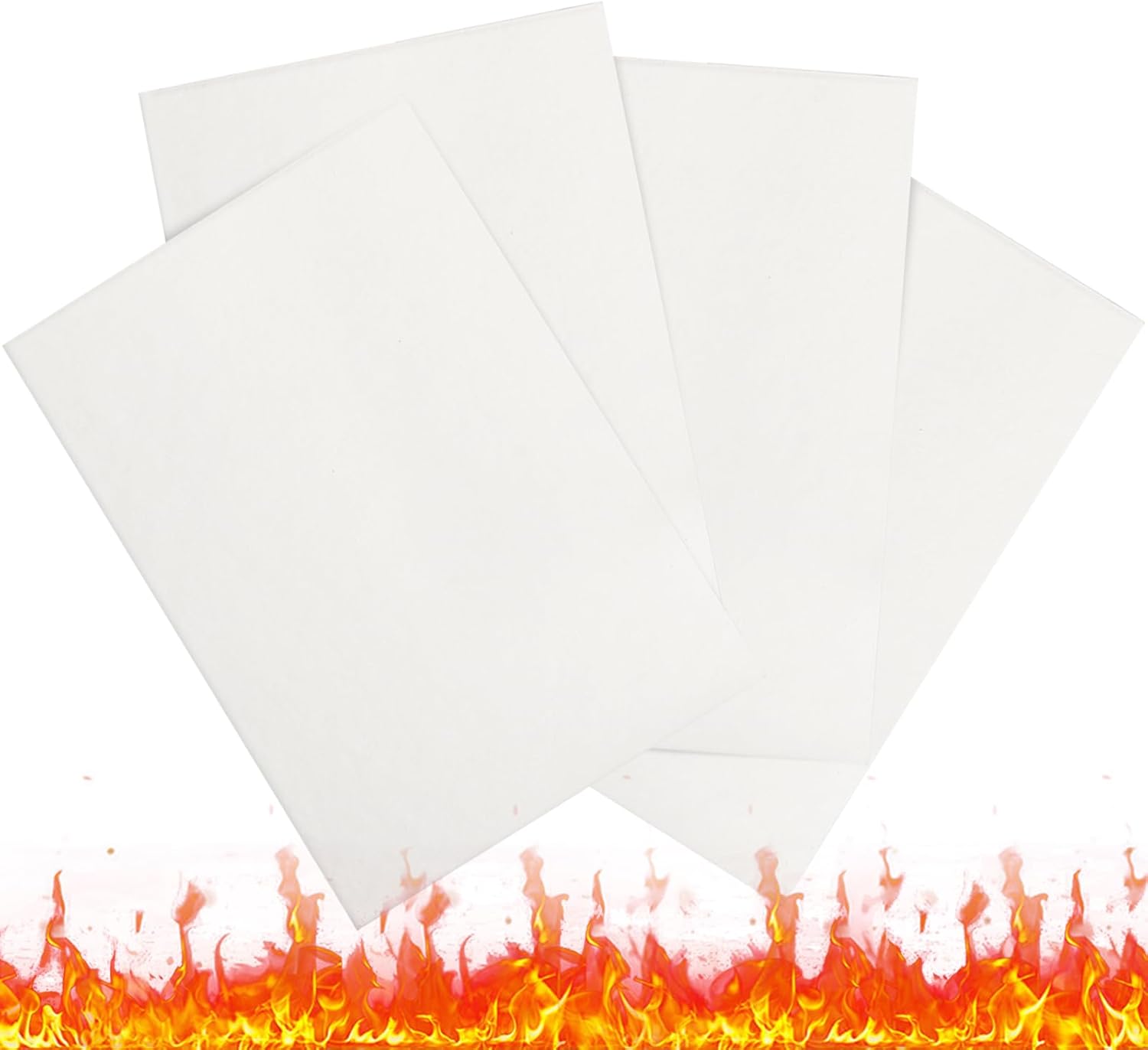
GA-60 Aerogel Composite Insulation Sheet
Description: A nano-porous silica aerogel reinforced with aluminosilicate ceramic fibers, designed for ultra-low thermal conductivity and high-temperature durability.
| Thermal Conductivity | ≤ 0.025 W/(m·K) |
|---|---|
| Temperature Range | -196°C to 850°C (short-term 1200°C) |
| Flame Rating | UL94 V-0 |
| Applications | Thermal barriers between modules, hotspot isolation, enclosure insulation |
GA-60 serves as a high-temperature barrier to slow heat transfer during thermal runaway, providing critical containment time.
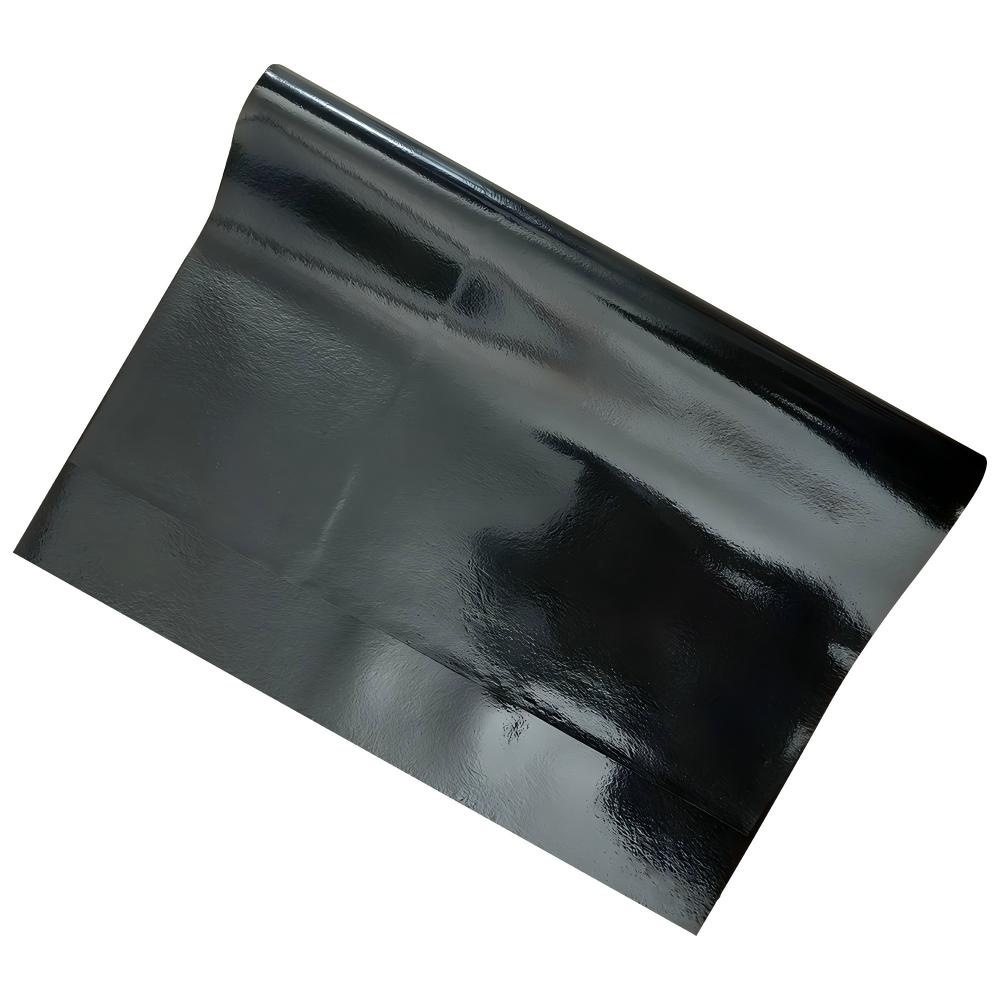
HI-370 Thermally Insulating Silicone Foam
Description: Closed or semi-open cell silicone foam offering thermal insulation, elasticity, and flame resistance under wide temperature ranges.
| Thermal Conductivity | ≈ 0.07 W/(m·K) |
|---|---|
| Operating Temperature | -55°C to 200°C (stable up to 500°C) |
| Density | ≈ 370 kg/m³ |
| Flame Rating | UL94 V-0 |
| Applications | Inter-module gap filling, vibration damping, insulation interface |
HI-370 balances cushioning, thermal buffering, and dielectric performance — ideal for modules between aerogel and enclosure layers.
TY-640 Silicone Sealing Foam
Description: A medium-density silicone foam for sealing, water resistance, and environmental isolation, available in adhesive-backed configurations.
| Thermal Conductivity | ≈ 0.064 W/(m·K) |
|---|---|
| Density | ≈ 400 kg/m³ |
| Temperature Range | -55°C to 200°C |
| Dielectric Strength | ≈ 6.4 kV/mm |
| Applications | Pack edge sealing, enclosure joints, secondary thermal barrier |
TY-640 enhances edge sealing and insulation. Its flexibility and flame resistance support containment and external protection.

4. Layered Application Strategy
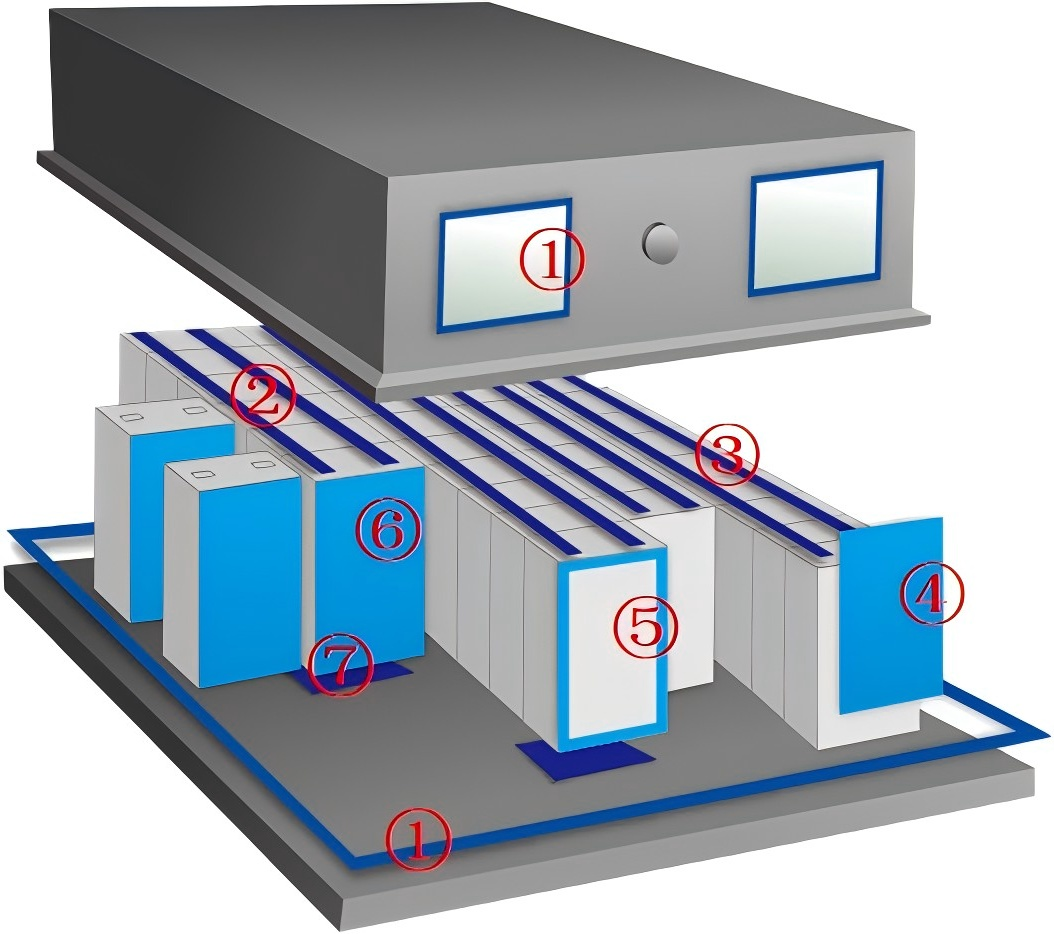
- Layer 1 (Hot Zone): GA-60 Aerogel — high-temperature isolation near cells.
- Layer 2 (Intermediate Zone): HI-370 Silicone Foam — mechanical cushioning and heat buffering.
- Layer 3 (Peripheral Zone): TY-640 Silicone Foam — sealing and secondary insulation.
The multi-layer approach provides time delay, temperature control, and safety margins in the event of cell thermal failure.
5. Conclusion
Thermal runaway is a complex electrochemical and thermal feedback process. Effective mitigation requires a system-level design combining electronic control, optimized heat paths, and multi-layer passive protection. The TOUSEN® GA-60, HI-370, and TY-640 materials collectively enhance the resilience of EV battery systems against thermal propagation.
Thermal Interface Pads for EV Battery and Energy Storage Systems | TOUSEN
Thermal Conductive Silicone Pads: Application Analysis in New Energy Fields
Related Article